
Guide
Monster Hunter Outlanders Crafting and Building Guide
Monster Hunter Outlanders crafting and building explained: preparing gear and supplies, building for traversal, and habits that support every hunt.

FIELD GUIDE On this page
Crafting and building in Monster Hunter Outlanders are the systems that let hunters prepare gear and supplies, and reshape how they move through Aesoland using the game building and traversal systems. They are easy to underrate in your first hours, when every monster is new and building sounds like homework. Do not skip them. The hunters who invest early in Monster Hunter Outlanders official site systems like these hunt faster, travel smarter and recover from bad fights more cheaply than hunters who live hand to mouth.
Two systems, one purpose
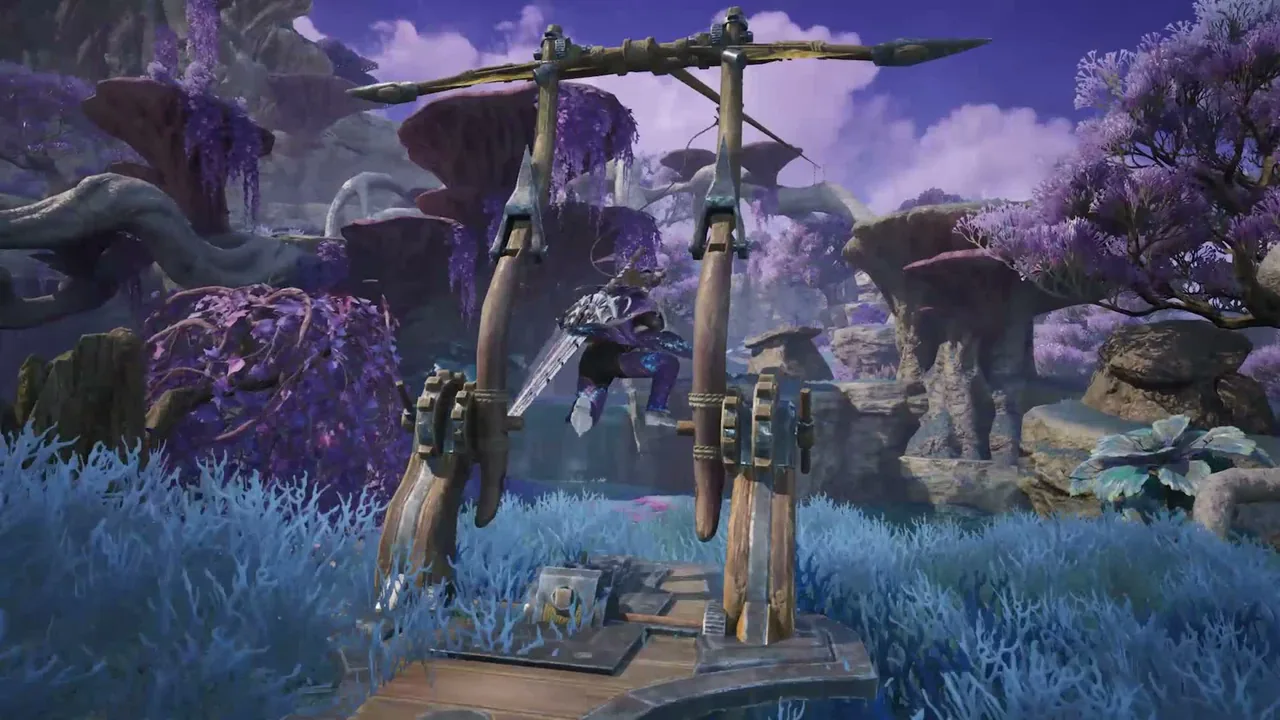
Crafting and building serve the same master: preparation. Crafting turns what you gather and earn in the field into the gear and supplies your next hunt depends on. Building works on the world itself, supporting traversal and giving you options in terrain that would otherwise slow you down or close routes entirely. Think of crafting as preparation you carry, and building as preparation you place. A hunter who uses both arrives at every fight with fuller bags and better ground, and that double advantage is worth more than one rarity tier of equipment.
Gather with your next craft in mind
Wandering Aesoland with empty attention wastes half its value. As you explore, gather as a habit, not an errand: materials collected a little at a time, on every route, build the stockpile that crafting quietly consumes. Before big hunts, check what you intend to craft and what it needs, then let your travel routes pass through the right ground. That small loop, hunt, gather, craft, hunt again, is the engine of steady progress, and it never asks for a dedicated farming evening unless you want one. In Monster Hunter Outlanders, gathering is never wasted time when the next craft is already in mind.
- Gather a little on every trip rather than farming rarely
- Check crafting needs before a big hunt, not after it
- Keep a reserve of everyday supplies so one bad hunt cannot empty you
- Let travel routes double as gathering routes
Building for traversal first
The most valuable building is the kind that moves you. Structures and placed aids that help you climb, cross and descend turn Aesoland from a set of regions into one connected island, and routes you build once serve every future hunt in that area. Prioritise traversal building early, when your map knowledge is growing fastest. Explore a region first, then build the route that makes it yours: that order turns raw discovery into permanent access.
Build with the return journey in mind as well. A route that only works one way is half a route, and tired hunters carrying a hard won result home deserve the easy version of the trip. Monster Hunter Outlanders rewards builders who think in round trips.
Building with the fight in mind
Once traversal building is habit, think about hunts. Ground shapes fights: where you can retreat, where a monster can be drawn, where your team can spread out in co op. Building that improves those options before a known hard fight is preparation at its smartest, and it costs minutes rather than the items a failed hunt burns. If fights still fall apart for technical reasons rather than tactical ones, work through the not working fixes for crashes and black screens before rebuilding your whole strategy around a problem that was never tactical. And if the fight stutters and drops frames rather than crashing, the lag fix guide for smoother field performance belongs on that same technical checklist.
A crafting rhythm that sustains itself
Craft in small, regular passes. After each session, spend two minutes turning the session gatherings into supplies and checking gear needs, while the hunts are fresh in your mind. Small passes prevent the two classic failures: arriving at a major hunt missing a basic supply, and sitting on a mountain of raw materials while hunting underprepared. Guildmates notice this rhythm quickly, by the way. The hunter who always has the needed item becomes quietly indispensable. That rhythm is the unglamorous core of Monster Hunter Outlanders crafting, and it works from your first week onward.
What to prioritise as a beginner
Early on, craft breadth before power: a complete set of everyday supplies and reliable gear you understand beats one impressive piece surrounded by gaps. Build traversal before decoration, and learn what each system does by using it on easy ground. Later, with the island known and your weapon mastered, specialise freely. The systems reward the same quality everywhere in this game: a hunter who prepares on purpose. Monster Hunter Outlanders was designed for exactly that hunter.
Quick Answers
What is building for in Monster Hunter Outlanders?
Building supports traversal and hunt preparation: better routes across Aesoland, better ground for fights, and options that save time and items.
Is crafting worth doing as a beginner?
Yes. Craft breadth before power: complete everyday supplies and gear you understand will carry you further than one strong piece with gaps around it.
How do I keep up with materials?
Gather a little on every trip, check crafting needs before big hunts, and turn gatherings into supplies in small passes after each session.
Conclusion
Crafting and building are the quiet half of hunting, the half that decides fights before they start. Gather with a purpose, build for traversal and for the fight, and keep a rhythm that refills what your hunts consume. Hunters who prepare at this level rarely feel underpowered, because their gear grows at the same pace as their ambitions.