Guide
Monster Hunter Outlanders Co-op Guide: Hunt With a 4-Player Squad
Hunt together in Monster Hunter Outlanders: how 4-player co-op works, building a balanced squad, playing your role, and making team hunts run smoothly.

FIELD GUIDE On this page
Co-op in Monster Hunter Outlanders APK is the game's 4-player hunting mode, where a squad of hunters explores Aesoland and takes on monsters together. It changes everything about a hunt: attention is shared, roles emerge, and monsters that felt overwhelming alone become fair, even glorious, in company. This guide explains how to build a balanced squad, what each hunter should actually do in a team fight, and how to make group hunts run smoothly from the first expedition together.
How co-op changes a hunt
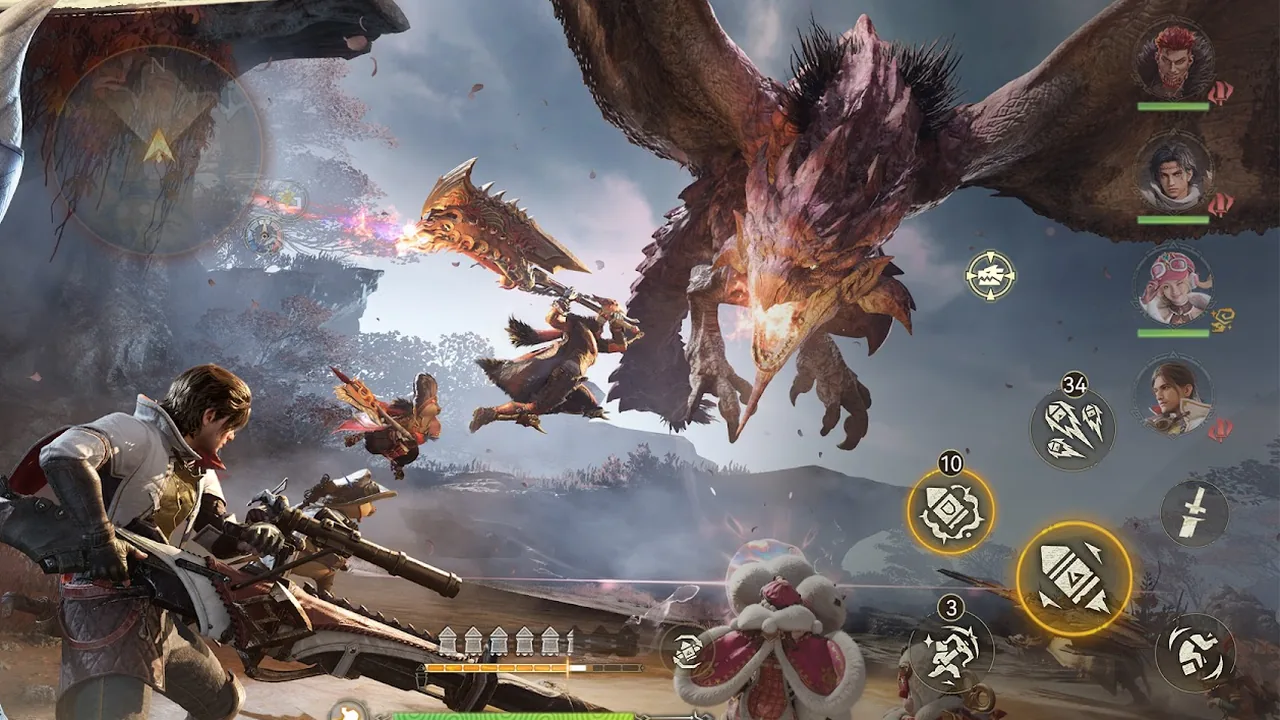
A monster has only so much attention, and four hunters divide it four ways. That single fact makes co-op more forgiving than solo play and more dynamic at the same time: while the monster commits to one hunter, the other three have real openings to attack, heal or reposition. Combat stays fully manual, with no auto-combat, so coordination is a genuine skill. The squads that thrive are not the four strongest individuals; they are the four who understand what the team needs at each moment.
Building a balanced squad
Balance starts with variety. Mix close range and ranged hunters so the squad can pressure a monster from every distance, and avoid four copies of the same Adventurer and weapon style, which gives the team the same blind spot four times over. The roster of 13 Adventurers makes variety easy. Buddies join the picture as well, adding companions to the field, so a full squad is a small crowd that a monster must constantly reprioritise, and that confusion is your greatest weapon.
| Squad job | What it does for the team |
|---|---|
| Front line | Holds the monster's attention and creates openings |
| Ranged cover | Punishes openings safely from distance |
| Flexible support | Adapts: attacks, heals and repositions where needed |
| Buddy support | Companions divide attention further in every fight |
Playing your role in the fight
Your role is a promise to the team. Front line hunters stay visible and deliberate, giving the monster a clear target and their teammates predictable openings. Ranged hunters watch the whole field, not just their crosshair, and call out danger. Everyone shares two duties regardless of role: heal with awareness, because a hunter on the ground helps nobody, and revive the team's rhythm after a knockdown by repositioning calmly instead of charging back in anger. Small discipline, repeated, is what squad play is made of.
Communication that actually works
Keep it short and early. Agree on the target and the plan before the hunt starts, call important moments during it, such as needing cover to heal, and save analysis for afterwards. Long speeches mid fight help no one. A two minute debrief after each hunt, covering what worked and what surprised you, improves a squad faster than any other habit. Regular groups should capture that progress properly, which is why our Monster Hunter Outlanders guilds guide for organised hunting groups pairs so naturally with the co-op life.
Co-op for radiant and Elder Dragon hunts
Team play matters most where the game is hardest. Radiant Species punish divided attention spans, and Elder Dragon hunts are marathon tests of exactly the coordination co-op builds. Squads preparing for those heights should master their roles on ordinary hunts first, then step up together. When your group is ready to aim at the summit, the preparation path in the Monster Hunter Outlanders controls guide covering both control schemes will help every member lock their setup, because a squad is only as settled as its least comfortable player's controls.
Hunting together, well
One principle sits under everything in squad play: a team wins hunts before the first swing, in how it prepares, assigns roles and agrees to communicate.
The best squads in Aesoland share three traits: they prepare together, they forgive mistakes instantly, and they debrief honestly. Build those habits and 4-player co-op becomes the heart of Monster Hunter Outlanders, the mode where the game's exploration, manual combat and radiant mysteries all meet other people. Solo hunting teaches you the island. Squad hunting teaches you why you wanted company on it. Both lessons belong to Monster Hunter Outlanders, and Monster Hunter Outlanders is richer for teaching them side by side.
Quick Answers
How many players can hunt together in Monster Hunter Outlanders?
Up to 4 players can hunt together in co-op, exploring Aesoland and taking on monsters as a squad, including Radiant Species and Elder Dragon hunts.
Is co-op better than solo in Monster Hunter Outlanders?
Neither is better. Solo play teaches self reliance with your buddy's help, while co-op divides a monster's attention and lets a squad play defined roles.
What makes a good co-op squad in Monster Hunter Outlanders?
Variety and communication: a mix of close range and ranged hunters, clear roles agreed before the hunt, short callouts during it, and a quick debrief after.
Can I play Monster Hunter Outlanders entirely in co-op?
Yes. Co-op supports full hunting across Aesoland, and many players do their hardest hunts, including radiant targets, as a regular 4-player squad.
Conclusion
Co-op is where Monster Hunter Outlanders becomes a team sport: four hunters, four roles, one monster. Build a balanced squad, communicate in short and useful ways, and play your part instead of chasing the spotlight. Do that, and the hardest hunts in Aesoland, Radiant Species and Elder Dragons included, become the most enjoyable ones.